
Lessons from Strong Towns 2026 for Amarillo and Canyon
I recently had the pleasure of attending the Strong Towns National Gathering in Fayetteville, Arkansas. Strong Towns is an organization focused on helping cities build financially resilient, people‑first communities. I want to share a few lessons with our local community leaders that I hope will move Amarillo and Canyon toward happier, healthier places.
Both Amarillo and Canyon are feeling the squeeze from all sides as both tackle aging streets and pipes, rising construction costs, and residents who are upset about declining public services. Strong Towns helped me put language to that tension and offered a simple question: “Are we building more public obligation than our tax base can sustain?”
Recent decisions like Canyon’s bond for fire department expansion and Amarillo’s upcoming billion‑dollar water treatment plant are signs that our existing pattern of growth is financially straining us. These are important investments, but they also highlight how much we’ve already over committed ourselves to maintain because we don’t have funds for other projects.
For decades, our default answer to “growth” has been big, spread‑out, car‑oriented projects with wide roads, large intersections, and huge parking lots. With every extra foot of asphalt, curb, and pipe is a long‑term promise to maintain and eventually replace. Many upcoming capital projects for Canyon are replacement/repair projects for aging infrastructure. As those future maintenance costs build up, there is less money left for parks, pools, libraries, and other public amenities.
A one‑story building wrapped in parking doesn’t generate much tax value per foot of street or pipe. By contrast, a modest, walkable block with a mix of homes and small businesses can put far more value on the same amount of infrastructure. That’s the Strong Towns “math problem” in plain terms: too much asphalt, not enough productivity.
Parking is a clear example of how we design ourselves out of productivity. Our newer developments often drown in it. Minimum parking requirements push builders to pave far more than most sites truly need. Every extra stall is more asphalt to build, more storm water to manage, and more land taken out of productive use.
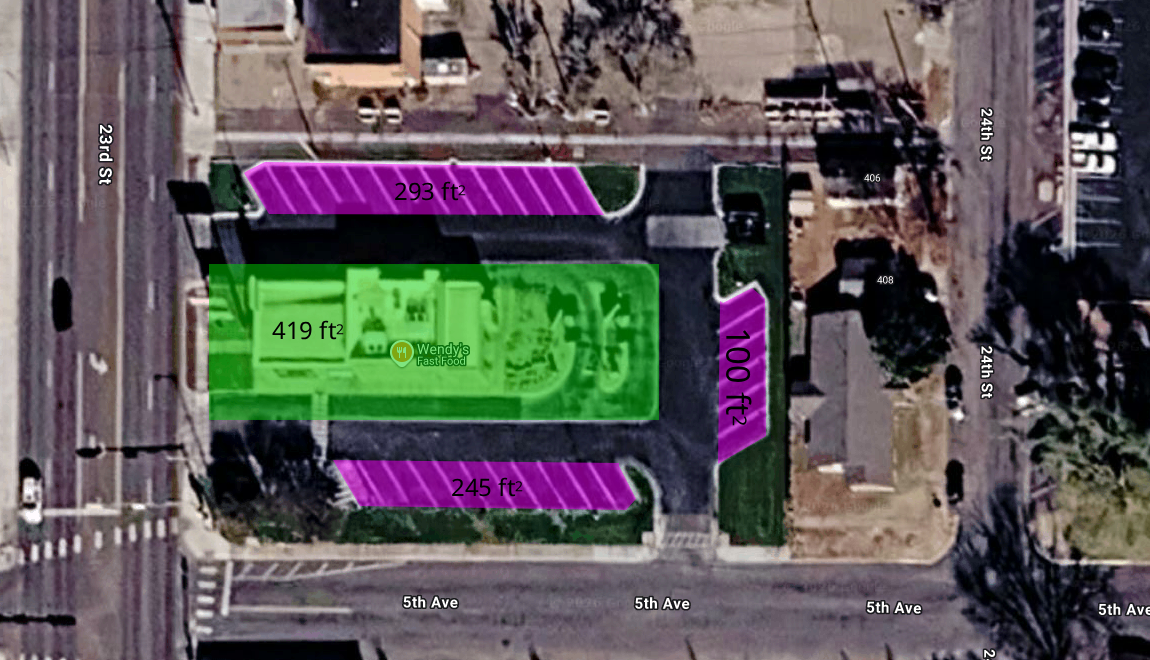
As an example, in Canyon, the Wendy’s building and drive-thru is roughly 419 sqft. The actual parking spaces takes up roughly 650 sqft!
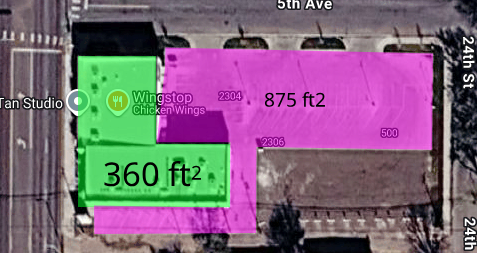
A slightly different example is the Buffs Legacy building (TeaNergy, Wingstop) which is roughly 360 sqft with over 875 sqft of car space. I’m not advocating to remove all the parking, but certainty having 60% of land be devoted to parking is a missed opportunity.
If we dial back minimums and allow shared parking, we free up land for taxable buildings, green space, or missing‑middle homes. Same land, same pipes, but more value and less pavement to maintain. A great organization that goes more in depth for parking is Parking Reform Network.
I don’t want to get caught up on just parking, because street design is similar. When we build for people, and not just cars, narrower lanes, calmer speeds, good sidewalks and crossings, more trees, we’re reducing the amount of pavement to resurface, keeping intersections simpler, and lowering the severity of crashes. A comfortable, walkable street usually costs less per foot over its life and supports more tax base than a high‑speed stroad lined with parking lots.
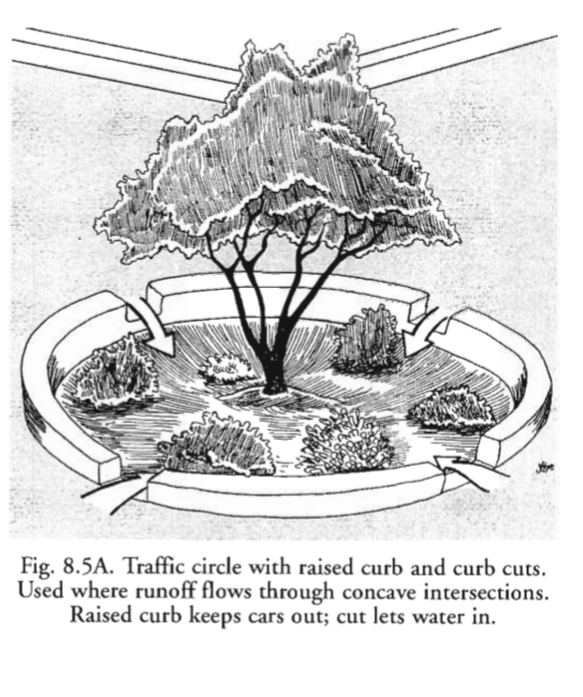
Small projects tend to reuse existing streets and utilities rather than pushing the network farther out. They thicken our tax base where we’ve already paid to serve, instead of stretching us thinner. This is how we create financially resilient cities. Maybe we can’t replace all the asphalt, but what if we reduced it a little here for concrete sidewalks, or added neighborhood roundabouts with green space to capture rain water. All of those small enhancements make our communities safer and more enjoyable, all while reducing the financial burden of street maintenance.
The Strong Towns mindset doesn’t demand a revolution. It asks us, in each decision, to tilt a little more toward:
Less unnecessary asphalt.
More value per foot of street and pipe.
Fewer policy obstacles to small, incremental projects.
Streets that are safe and pleasant for walking and biking,not just fast driving.
Those are the kinds of quiet, practical choices that make a city more resilient over time without asking our residents to write a blank check.
It is for this reason that I hope our city leaders will take an interest in Strong Towns, and in their Accelerator course designed for city staff, technical professionals, and community leaders who want to move from insight to action and make our communities more financially resilient.
If this resonates with you, I’d ask that we schedule a short work session to discuss enrolling a small city team in the Strong Towns Accelerator and to identify one or two specific challenges (such as parking mandates or street design on a key corridor) that we’d like to tackle through the course. This would be a low‑risk, high‑return way to start shifting our city toward stronger, more resilient growth.